

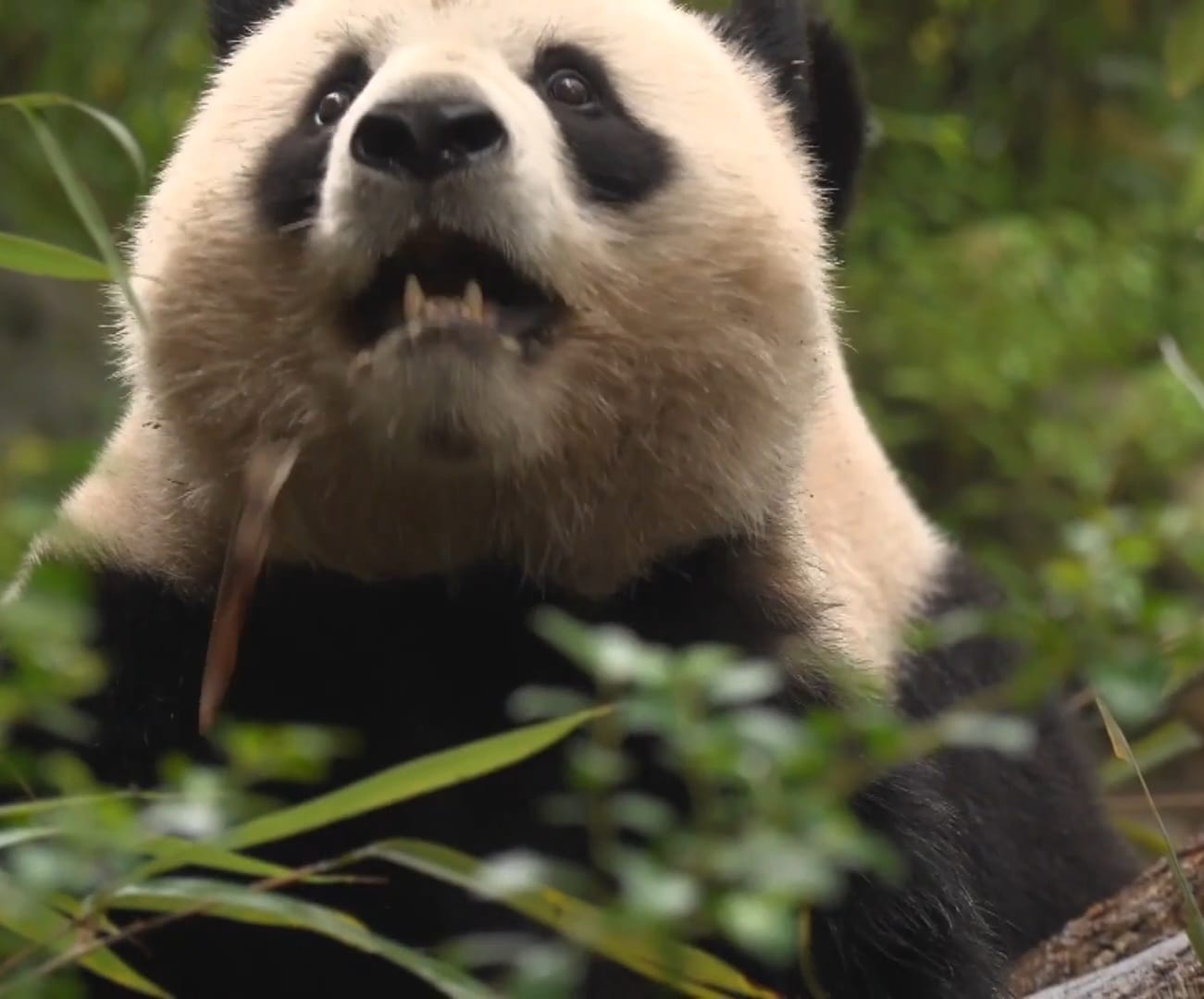
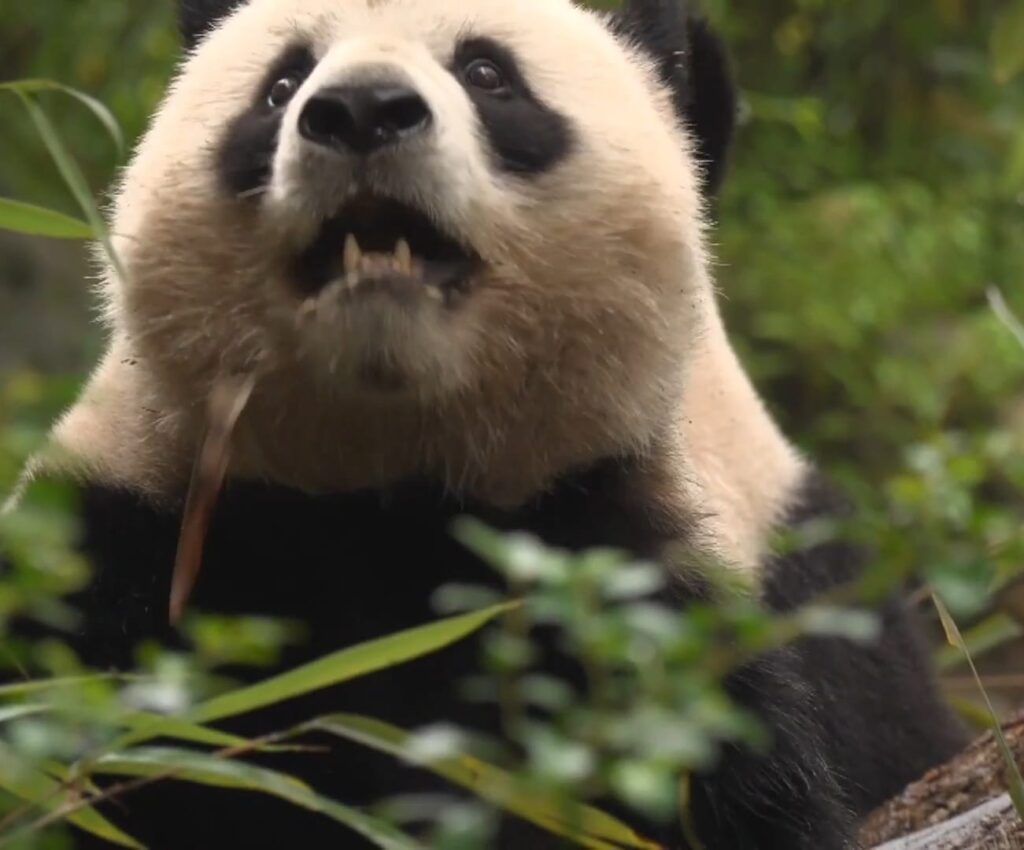
A giant panda in China has received a custom orthodontic treatment to correct a severely misaligned lower jaw.
Specialists from West China Hospital of Stomatology and the Chengdu Research Base of Giant Panda Breeding used digital scans and a specially designed appliance to guide the jaw back toward a normal position. The six-month treatment restored Beixia’s ability to suck, bite, chew and swallow normally.
Beixia is a male giant panda born in 2022 at the Chengdu Research Base of Giant Panda Breeding in Sichuan Province. He suffered injuries to his lower jaw and left forelimb shortly after birth, which later affected his feeding posture and jaw development. By about three months of age, his lower jaw had shifted significantly toward the left.
The forelimb injury eventually required amputation, which further changed the way Beixia positioned himself while feeding. The combination of the early jaw injury and changes in his feeding posture placed additional strain on his developing lower jaw. Milk began leaking from his mouth, raising concerns about his ability to feed normally as he grew.
READ ALSO: https://modernmechanics24.com/post/drone-boat-apache-pilots-joins-strike/
The problem also presented a longer-term concern because giant pandas depend heavily on their mouths and teeth to process bamboo.
As Beixia moved from milk toward solid food, specialists needed to ensure that his jaw could support normal biting and chewing. They therefore chose to intervene while his facial bones were still developing.
Treatment Borrowed From Humans
The veterinary and dental teams adapted a technique normally used in human orthodontics. The approach uses controlled forces during growth to guide an incorrectly positioned jaw toward a more balanced alignment. It was the first reported use of this type of growth-modification treatment in a giant panda.
Specialists led by orthodontist Long Hu used intraoral scanning and 3D digital technology to examine Beixia’s mouth. The digital information allowed them to design an appliance specifically for the shape and size of his jaw. The device used three orthodontic elastic bands to apply gentle traction and gradually guide the lower jaw.
The appliance was fixed inside the mouth and required careful daily management. Caregivers removed the elastic bands before feeding and replaced them afterward. They also watched Beixia closely because he initially tried to push the appliance with his tongue or touch his mouth with his paw.
Six Months Of Care
The treatment continued for about six months as Beixia’s jaw developed. Instead of forcing the jaw into a new position, the appliance used controlled pressure to work with his natural growth. This allowed specialists to address the asymmetry while avoiding more invasive treatment.
Long said little was known about jaw development in giant pandas when the team began working on Beixia’s case.
He said the specialists decided to attempt the treatment because of its importance to the panda’s health. The case later became a reference point for applying human orthodontic methods to another species.
Follow-up examinations showed that the deviation of Beixia’s lower jaw had been largely corrected. His sucking, biting, chewing and swallowing functions returned to normal. The treatment findings were published in July in The Angle Orthodontist, an international journal focused on orthodontic research.
WATCH ALSO: https://modernmechanics24.com/post/us-marines-test-king-stallion-combat/
A New Area Of Panda Care
Beixia is now four years old and remains active at Panda Valley in Dujiangyan, Sichuan. He is able to eat normally despite the serious problems he experienced early in life. His case has also added clinical information to the relatively limited body of knowledge on panda oral health.
The procedure was carried out jointly by specialists from West China Hospital of Stomatology and the Chengdu Research Base of Giant Panda Breeding. The teams described it as the world’s first functional orthopedic treatment for mandibular asymmetry in a giant panda. Its success shows how digital dental tools can be adapted to the specific anatomy of wildlife under human care.
The development comes as China’s captive giant panda population continues to receive more specialized veterinary attention. The captive population reached 808 animals by the end of 2025, according to the information provided by the panda conservation authorities. The Chengdu-based team plans to build more systematic oral health records and expand research into panda dentistry.
Wu Honglin, deputy director of the Shenshuping base of the China Conservation and Research Center for the Giant Panda, said the broader goal is to maintain healthy and sustainable population growth.
For veterinary teams, Beixia’s case provides practical information for identifying and treating dental and jaw problems in pandas at an early stage. Future work is expected to focus on building better oral health monitoring and treatment methods for giant pandas.













One Response