

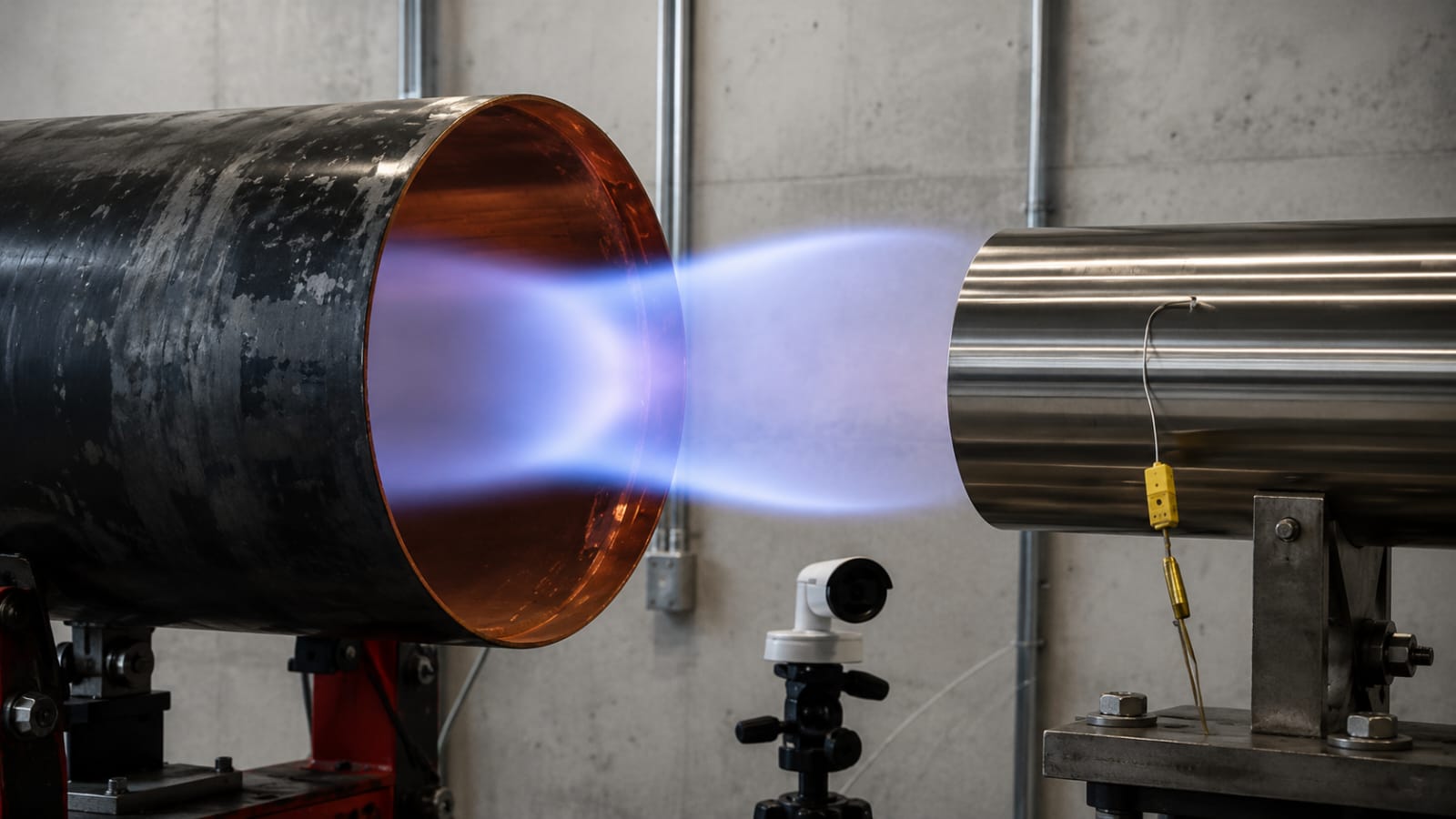
Tiberius Aerospace has moved its Invictus long-range precision strike system into formal engineering Test and Evaluation (T&E), taking the program beyond early laboratory development.
The company says the step will focus on validating propulsion, flight performance, guidance, platform integration and manufacturing. The development comes as the US and its allies seek ways to expand long-range strike capacity and replenish missile inventories.
Invictus Enters Formal Testing
Invictus is being developed as a tube-launched, multi-mission weapon that can be integrated with different platforms. Its design is intended to support launches from vertical launch systems and autonomous vehicles operating on land and at sea. This approach is aimed at giving military users more options for deploying long-range precision effects across different operating environments.
The program builds on Tiberius Aerospace’s earlier work on ramjet-powered weapons. The company introduced its first ramjet munition, Sceptre, in May 2025 and has since reported successful ramjet ignition during a live firing in the US. Tiberius says the experience gained from Sceptre has helped accelerate Invictus from exploratory research into a structured engineering program.
READ ALSO: https://modernmechanics24.com/post/us-navy-nato-new-nsv-seasparrow-missile/
A ramjet is an air-breathing engine that uses the forward movement of a vehicle to compress incoming air before combustion. Unlike a conventional rocket, it does not need to carry all of its oxidizer, allowing the propulsion system to use atmospheric oxygen during flight. For Invictus, the technology is intended to provide sustained high-speed flight after launch.
Engine Tests Move Forward
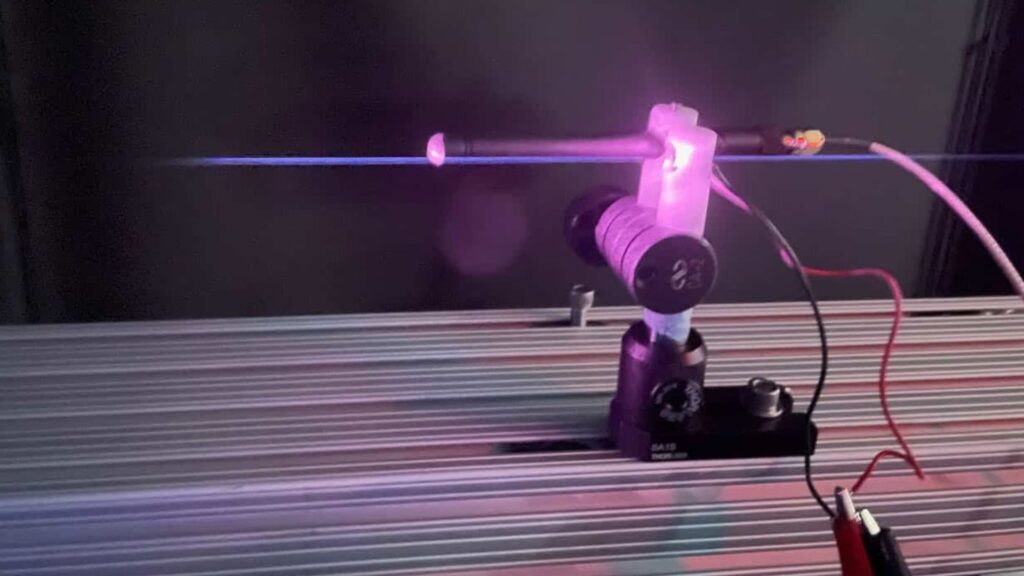
Direct-connect testing of the Invictus ramjet engine is already underway at Purdue University’s Zucrow Laboratories.
According to Tiberius Aerospace, the engine has demonstrated strong operability using Jet-A fuel under all conditions tested so far. Jet-A is a widely used aviation fuel, and its use is part of the company’s effort to keep the propulsion system compatible with established fuel infrastructure.
The next phase will examine more than engine performance. Engineers are expected to assess how the propulsion system works with the complete weapon, including its flight characteristics, guidance systems and launch platforms. Manufacturing will also form part of the evaluation because the company intends to develop Invictus for production at larger volumes.
The Invictus-200 variant is designed to combine a ramjet engine with an integral booster. Tiberius says the configuration is intended to reach speeds of up to Mach 3, or roughly three times the speed of sound, and provide a range of up to 200 kilometers.
The system is also designed around a 10-to-15-kilogram payload and a stated precision of 5.5 meters Circular Error Probable, depending on the guidance configuration.
Focus Shifts Toward Production
Tiberius says Invictus is being developed with a modular and open architecture. In simple terms, this means major parts of the system can be adapted or upgraded without redesigning the entire weapon. The approach is intended to allow the system to respond to changing mission requirements during its service life.
The company also says affordability and production capacity are central to the program. Its AI-powered GRAIL platform is being used to connect program requirements with suppliers in the US and allied countries. Tiberius describes this as a Silicon Valley-style approach to defense development, with greater emphasis on rapid engineering cycles, supplier coordination and scalable manufacturing.
WATCH ALSO: https://modernmechanics24.com/post/china-new-massive-battle-tank-live-fire/
Founder and CEO Chad Steelberg said the transition into formal engineering, testing and evaluation is an important step in moving Invictus toward a deployable system.
He said the company designed Invictus and Sceptre from the beginning to reduce costs, support high-volume manufacturing and allow future upgrades. Steelberg also said GRAIL is being used to strengthen connections with domestic and allied suppliers and support a more resilient industrial base.
Long-Range Capacity Under Pressure
The development is taking place amid wider concerns over long-range precision weapons inventories. The US and European NATO members have been working to expand production and rebuild stocks following increased demand for precision weapons.
Tiberius specifically points to the five-month conflict with Iran, claiming that the US Army used virtually all of its stockpile of Army Tactical Missile Systems(ATACMS), and Precision Strike Missiles. Those systems are designed to provide long-range precision fires, making inventory levels an important consideration for future military planning.
Across Europe, Western missile inventories have also faced pressure, encouraging governments and defense manufacturers to increase production. This has placed greater attention not only on the range and accuracy of new weapons, but also on how quickly and economically they can be manufactured.
Invictus is therefore being positioned around two requirements: capability and production capacity. Its developers are seeking to combine a 200-kilometer range, high-speed flight and precision guidance with a design that can be adapted to multiple platforms and produced at scale.
READ ALSO: https://modernmechanics24.com/post/general-atomics-wildfire-drone-reaper/
The move into formal T&E does not mean the system has completed development or entered operational service. Instead, it marks the beginning of a more structured phase in which the company will test whether the technology can meet its stated performance, integration and manufacturing requirements.
However, the program will provide a clearer assessment of Invictus’s ability to move from laboratory development toward a field-ready precision strike system. Its longer-term significance will depend on test results, production readiness and the ability to deliver a scalable weapon that can be integrated across multiple platforms.








One Response