A new study has provided fresh evidence explaining how the asteroid that struck Earth 66 million years ago caused one of the largest mass extinctions in history.
Researchers found that a massive cloud of fine dust created by the impact trapped heat around the planet, exposing animals and plants to extreme temperatures. The findings offer a clearer picture of why the Chicxulub impact wiped out about 75% of life on Earth, including most dinosaurs.
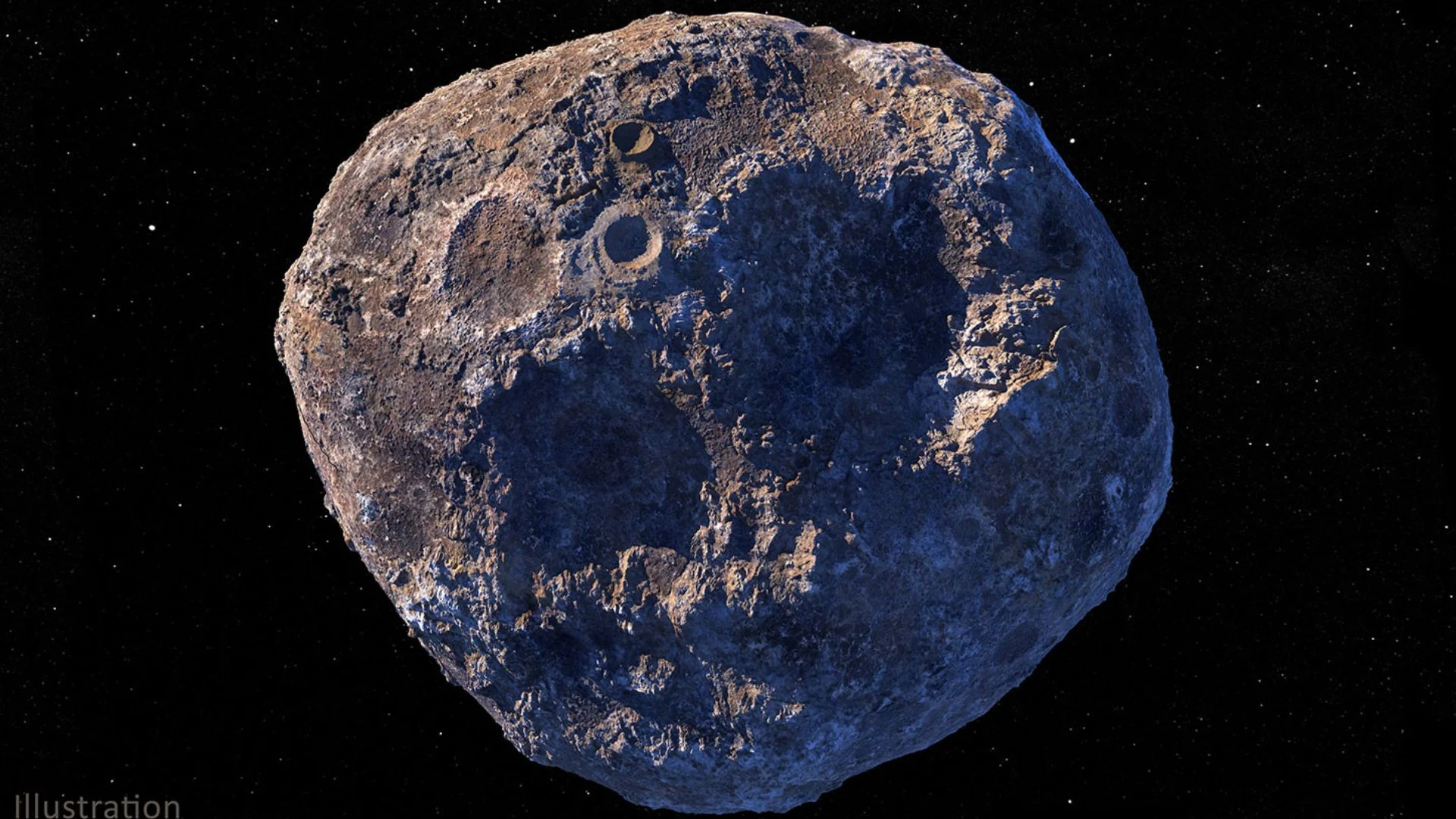
The asteroid, estimated to be about the size of Mount Everest, struck near today’s Yucatan Peninsula in Mexico and formed the Chicxulub crater.
Scientists have long linked this impact to the end of the Cretaceous Period and the disappearance of non-avian dinosaurs. The latest research explains that the heat trapped by fine dust, rather than the explosion itself, played a major role in the global disaster.
The study was conducted by planetary scientists at Purdue University and published in the Journal of Geophysical Research: Biogeosciences.
Researchers combined impact physics with atmospheric modeling to understand how the material thrown into the atmosphere affected Earth’s climate. Their findings show that the planet remained covered by a heat-trapping dust layer after the impact, creating conditions that few living organisms could survive.
READ ALSO: Pentagon’s $7 Billion Oracle Deal Aims to Cut Costs and Modernize Military Software
Dust Trapped Heat
According to the research team, the asteroid released an enormous amount of energy when it hit Earth. The collision instantly vaporized more than 1,000 cubic kilometers of rock, soil, and other material from the impact site. That material expanded high above the atmosphere before cooling and spreading around the planet.
As the hot material cooled, some of it condensed into tiny molten droplets of rock known as spherules. These particles measured about 250 micrometers across, roughly half the size of a grain of sugar. They eventually fell back toward Earth and became an important source of additional heat.
Researchers explained that air resistance heated the falling spherules during their descent. Each tiny particle released heat into the atmosphere, adding to the thermal energy already produced by the impact. This process continued across large parts of the planet rather than remaining limited to the impact zone.
Lead author Brandon Johnson, a professor in Purdue University’s Department of Earth, Atmospheric, and Planetary Sciences, studies planetary impacts and crater formation.
He said the enormous kinetic energy generated by the collision had to be converted into heat. Johnson explained that the global dust cloud prevented much of that heat from escaping into space.
“The dust cloud trapped thermal radiation, making it seem as if the planet’s surface was being continuously heated,” Johnson said. He added that the blast wave and the initial fireball affected only areas close to the impact site, while the dust cloud turned the event into a worldwide catastrophe. Without the dust layer, he said, many species would still have died, but the event would not have reached the same global scale.
Asteroid Unleashed Global Fires
Previous research by Johnson and his former collaborator Jay Melosh showed that the impact produced a huge plume of vaporized material. As this plume rose and cooled, it created both larger rock droplets and much finer dust particles. While the spherules eventually fell back to Earth, the smaller dust remained suspended in the atmosphere.
READ ALSO: LHC Oxygen Collisions Reveal Fresh Evidence of Quark-Gluon Plasma From the Early Universe
Scientists found that these fine particles formed a thick layer around the planet. Instead of allowing heat to escape into space, the dust reflected much of the thermal radiation back toward Earth’s surface. The researchers compared the effect to placing a lid on a cooking pot, where heat builds up because it cannot escape.
The study estimates that animals living during the Cretaceous Period received thermal radiation levels about 17 times higher than those considered completely lethal to humans. Such intense heating was sufficient to ignite dry grass, pine needles, lichens, and possibly even wood in some locations. These widespread fires added another deadly challenge for already stressed ecosystems.
Johnson said the surface of Earth would have appeared very different during this period. Thick clouds blocked sunlight, leaving much of the landscape dark except for the red glow from wildfires. He said only animals that found shelter underground, underwater or in protected environments had a realistic chance of surviving.
Clouds Blocked Escape
To understand exactly how the dust affected Earth’s atmosphere, the research team worked with Alexandria Johnson, an expert in cloud science. She analyzed both the individual dust particles and the overall structure of the atmospheric dust layer. Her work focused on how the cloud absorbed and released heat.
The team discovered that the dust cloud was almost completely impermeable to thermal radiation. In simple terms, it acted as an insulating blanket, trapping heat near the planet’s surface. As a result, temperatures remained dangerously high long after the initial impact had ended.
Alexandria Johnson explained that underground environments behaved differently because soil transfers heat much more slowly than air. Animals that burrowed below the surface or lived underwater were naturally shielded from much of the extreme heating. This may explain why some mammals, reptiles, amphibians, and aquatic species survived while many larger land animals disappeared.
The researchers believe the dust cloud remained in the atmosphere for years or even decades before finally settling. During that time, it continued to influence Earth’s climate and environmental conditions. Its long-lasting presence also meant living organisms faced dangers beyond the initial heat.
Lasting Health Effects
The fine dust particles measured only about 2.5 micrometers across, making them about 10 times smaller than the spherules. They were also around 30 times thinner than a human hair. Their tiny size allowed them to remain suspended in the atmosphere for extended periods.
READ ALSO: MIT Develops Recyclable Elastic Yarn That Matches Spandex While Tackling Textile Waste
Alexandria Johnson noted that these particles are similar in size to those produced by modern wildfires. Today, scientists know that such particles can enter the lungs and even enter the bloodstream, creating serious health risks. The ancient dust may have caused similar problems for any animals that survived the extreme heating.
The researchers said inhaling these particles would likely have created long-term health effects across many species. However, they emphasized that the immediate heat trapped beneath the dust cloud posed the greatest threat in the disaster’s early stages. Many organisms would not have survived long enough for air pollution to become the main concern.
The study also helps explain fossil discoveries made in locations far from the impact site. Scientists have previously recovered spherules in the gills of ancient paddlefish found in North Dakota, showing that debris from the impact spread rapidly across the planet. These findings support the idea that the asteroid’s effects reached nearly every corner of Earth.
The new research strengthens scientists’ understanding of one of Earth’s most important extinction events. Rather than blaming only the impact itself, it shows how atmospheric changes transformed a regional collision into a global environmental crisis. The findings may also improve future studies of planetary impacts and help scientists better understand how Earth’s atmosphere responds to extreme natural events.