
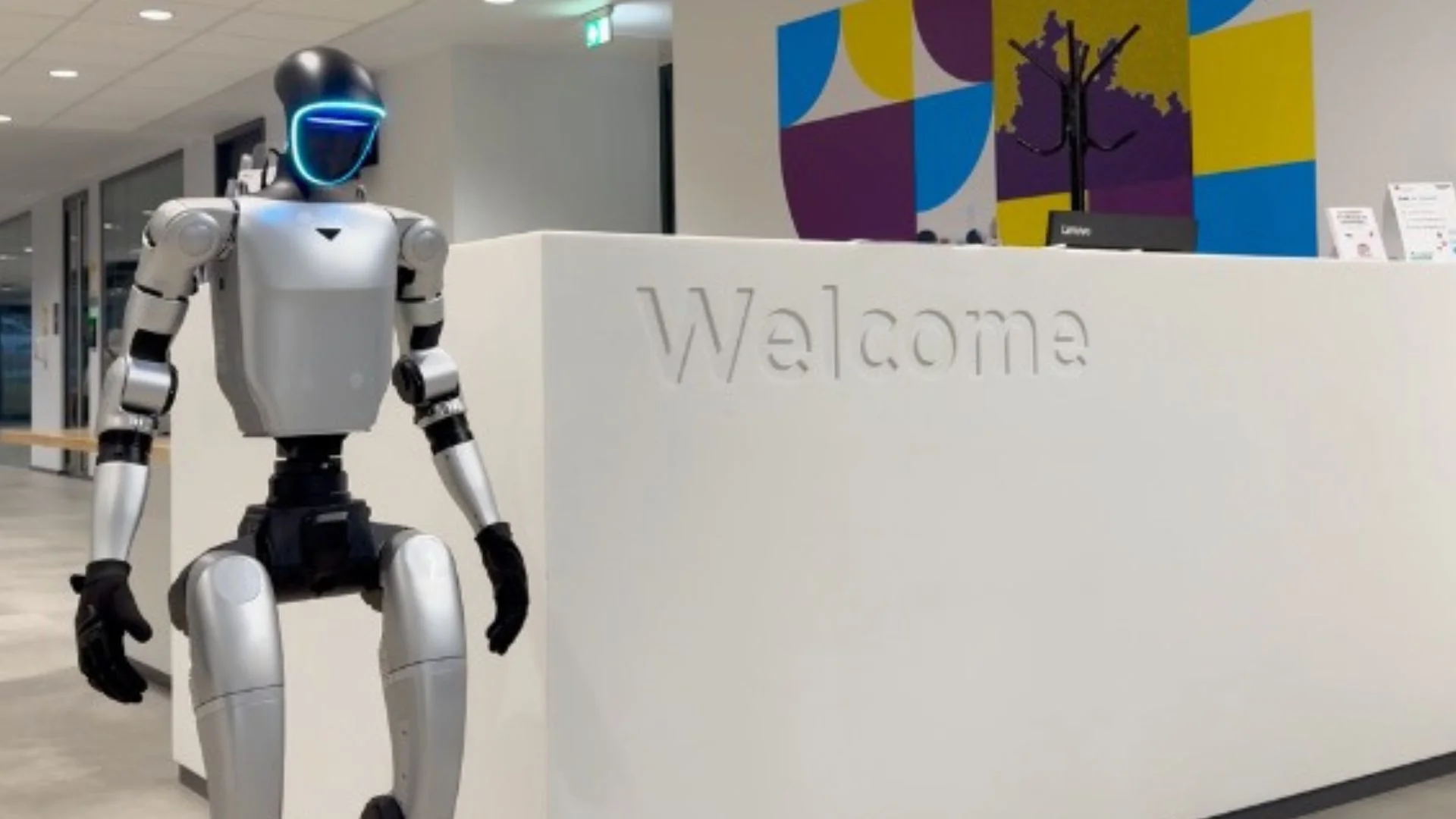
Durham University in the UK has welcomed a new humanoid robot named Alan. The robot will support research into how intelligent systems understand and respond to the world. It is a Unitree G1 Edu model designed for education and research.
The robot is based in the Department of Computer Science at Durham. Researchers from the VIViD research group will use Alan as a shared platform. The robot has already generated strong interest across the department.
Many robots today work in controlled labs with limited interaction. Researchers need a physical platform that combines movement, vision, and decision-making. Alan helps fill that gap by allowing teams to test ideas in real-life settings.
Alan is a humanoid robot that can move, see, and interact. It stands on two legs and has cameras and sensors. The robot can recognize people and objects, understand scenes, and copy human actions.
Researchers will use Alan to study assistive robotics. This means exploring how future robots could work safely alongside people. The robot may also appear at public events and demonstrations, but its main job is research.
One exciting goal is to help Alan make decisions in real time without heavy reliance on external computing resources. This would make the robot more independent and better suited to real-world environments, such as homes or hospitals.
WATCH ALSO: Buildroid AI expanding simulation-first robotic platform to multiple US sites
The robot is still a research platform, not a finished product. It cannot yet reliably perform complex tasks. It also requires skilled operators and ongoing software development.
This matters because humanoid robots could one day help the elderly, support workers, or assist in dangerous situations. By studying Alan, Durham researchers hope to build robots that observe, learn, and perform human tasks in respectful and helpful ways.