Chinese researchers have successfully ignited a solid rocket engine at a simulated depth of 200 metres. The test suggests that future missile systems could be pre‑positioned on the seabed far deeper than current submarines operate.
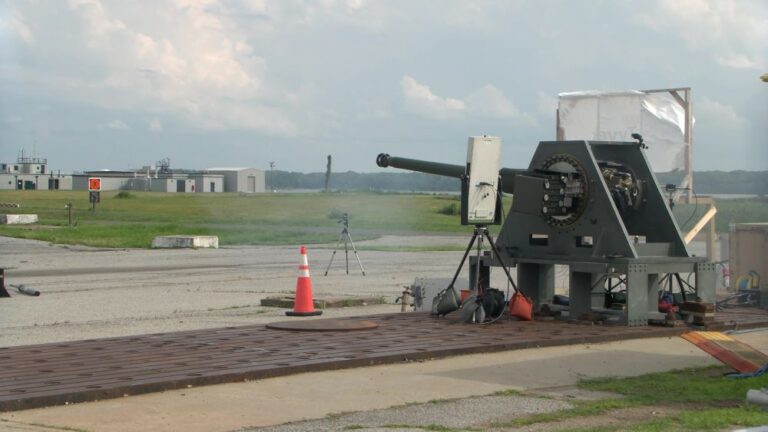
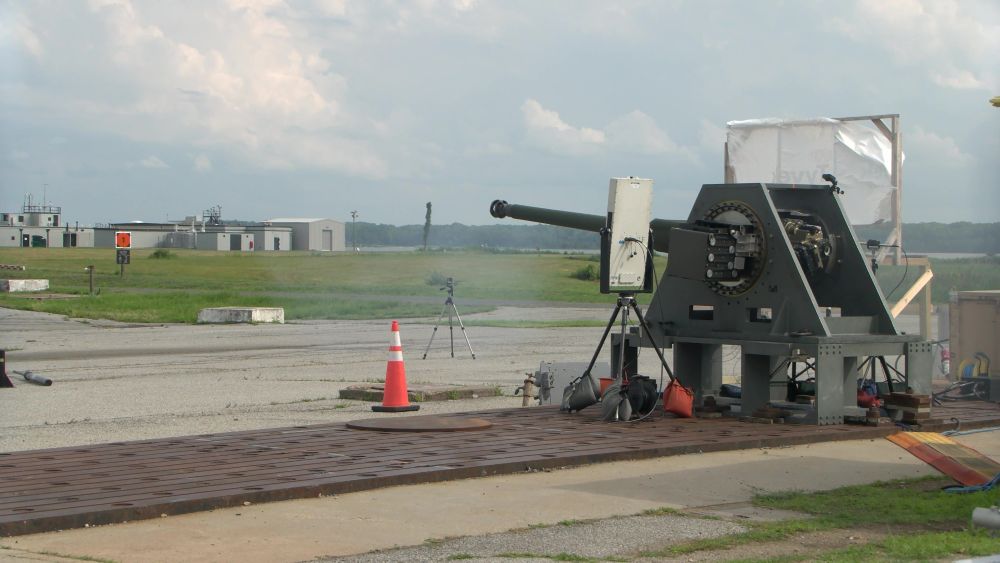
A team of engineers in Zhengzhou, China, has proven that a solid rocket engine can ignite reliably under extreme deep‑sea pressure. The experiment was conducted at a simulated depth of 200 metres — more than six times deeper than typical submarine‑launched missile firings.
The researchers, from the Mechano-Electrical Engineering Institute and the Key Laboratory of Underwater Intelligent Equipment, published their findings in the journal Tactical Missile Technology. They built a special platform to mimic the high‑pressure environment and recorded how the motor behaved during ignition.
READ ALSO: 850 US Tomahawk Cruise Missiles Fired: Is the Arsenal Under Pressure?
Today’s submarine‑launched ballistic missiles are usually fired from around 30 metres deep. Launching from greater depths is technically difficult because water pressure can disrupt the rocket’s ignition and thrust.
The test showed that at 200 metres, the solid motor’s combustion pressure remained stable, matching ground‑test levels. There were brief pressure and thrust fluctuations for a few milliseconds after ignition, but they quickly settled once the gas jet channel formed.
The test motor used a solid propellant, hydroxyl-terminated polybutadiene, with a 2.2 kg ignition charge and burned for roughly 5 seconds.
WATCH ALSO: EHang’s next-gen autonomous eVTOL completes first public flight
A reliable deep‑sea ignition could allow missiles to be pre‑placed on the ocean floor, waiting to be activated. This would turn large areas of the sea—like the South China Sea—into potential launch zones, increasing strategic flexibility.
The experiment was done on a laboratory platform, not in the open ocean. Real‑world conditions could add challenges such as currents, sediment, and long‑term corrosion. The researchers noted that open‑water tests at greater depths are still needed.
The researchers reported that, relative to tests conducted on land, the motor’s thrust dropped by 32.7% at a depth of 200 metres.
READ ALSO: No Chemicals, 90% Cleaner: How Sound Waves Turn Bubbles Into Powerful Scrubbers
This result aligns with a numerical study by the Beijing Institute of Technology in July last year, which indicated that at a depth of 300 metres, the average thrust during the start-up phase could fall to about 42.8%–47.1% of that achieved at ground level.
If the technology matures, it could change how nations think about underwater deterrence. Pre‑positioned deep‑sea missile systems would be harder to detect and destroy than submarine‑based ones, adding a new layer to strategic defence.