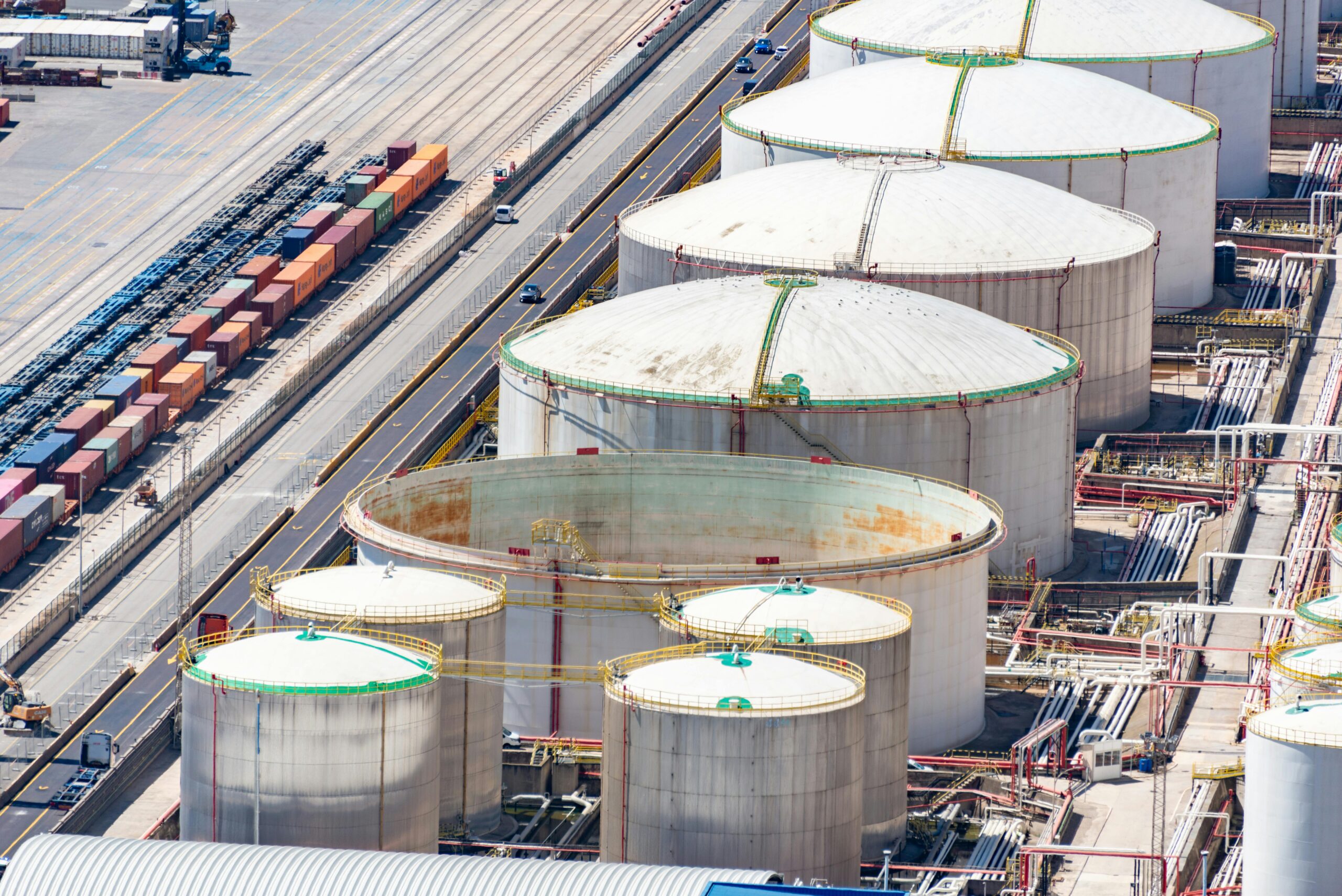
EVE Energy has switched on the world’s first grid-scale energy storage station powered by its groundbreaking 628Ah ultra-large battery cells—a 400MWh facility in China’s Hebei province. The milestone, achieved on January 31, 2026, validates that massive battery technology can finally move from laboratory curiosity to industrial backbone. Days later, the company locked in a 10GWh strategic partnership with Guowang Technology, signaling that the era of truly large-format energy storage has arrived.
The central problem EVE Energy set out to solve is deceptively simple: how do you store renewable energy at a scale that actually matters? Wind and solar farms produce enormous amounts of electricity, but the batteries designed to catch them have historically been too small, too expensive, or too short-lived. The company’s answer is the 628Ah ultra-large cell, a battery roughly the size of a thick textbook that packs enough capacity to power an average household for days.
Behind the technical achievement is a quiet shift in how these cells are built. Instead of traditional winding methods, EVE Energy adopted a stacking process combined with high-toughness separators, allowing the battery to maintain structural integrity at scale. What this means for operators is straightforward: fewer individual cells to manage, lower installation costs, and a system that doesn’t require constant babysitting. The Mr. Giant 5MWh DC blocks deployed at the Ruite New Energy Lingshou site represent the first time this approach has been proven under real grid conditions, not just test benches.
READ ALSO: https://modernmechanics24.com/post/australia-dart-hypersonic-ground-test/
Still, the technology carries honest constraints. While the 628Ah cells have now exceeded 1 million units in cumulative production, manufacturing such large-format batteries at consumer-electronics yields remains challenging. The company acknowledges that bringing defect rates down to single-digit parts per million—the threshold where costs truly become competitive with pumped hydro—will require another generation of factory automation. This is not yet a technology you can buy off a catalog; it is a proof of industrial capability that must now replicate itself across multiple gigafactories.
What makes the achievement matter, ultimately, is not the cell size itself but what it enables. Levelized cost of storage—the metric that determines whether utilities choose batteries over natural gas peaker plants—drops meaningfully when you can deploy 400MWh using only 80 DC blocks and 40 power conversion cabins. Fewer connections mean fewer failure points, simpler thermal management, and sites that can be constructed in months rather than years. According to EVE Energy’s official announcement, the Lingshou station demonstrates that large-format lithium-ion can now deliver the combination of safety, cycle life, and capital efficiency that grid operators have demanded for a decade.
WATCH ALSO: https://modernmechanics24.com/post/china-humanoid-robot-combat-moves/
The company positions itself simultaneously as innovator and manufacturer. While EVE Energy’s engineering teams—led by senior battery architects who moved from prototyping to production lines over three years—handled the cell design and system integration, the broader vision belongs to executives who placed early bets on large-format chemistries when much of the industry remained skeptical. That bet now carries momentum. The 10GWh agreement with Guowang Technology moves beyond simple supplier–customer dynamics into what both parties describe as co-development of future storage architectures.
Reported by EVE Energy’s official channels, the partnership aims to deploy the 628Ah platform across multiple provinces, with an emphasis on desert solar integration and industrial load shifting. This is not speculative research funding; it is committed manufacturing capacity scheduled through 2027. The implication is clear: large battery technology has crossed the chasm from pilot projects to procurement cycles.
What remains unsaid, but hovers over every paragraph of the announcement, is the competitive dimension. With Chinese battery manufacturers racing to standardize cells beyond 500Ah, the company that solves the yield puzzle first will dictate the next decade’s containerized storage designs. EVE Energy’s lead—first to announce, first to mass-produce, first to commission a grid-scale plant—is measurable in months, a meaningful advantage in an industry where capacity additions double every two years.
READ ALSO: https://modernmechanics24.com/post/rolls-royce-modular-gas-power-plants/
For the engineers who spent nights inside EVE’s Huizhou gigafactory debugging stacking alignment, the Lingshou connection is validation. For the planners at Guowang Technology, it is a tool to meet renewable integration targets. For the rest of us, it is one more signal that the energy transition now runs on batteries the size of furniture, not fingers.