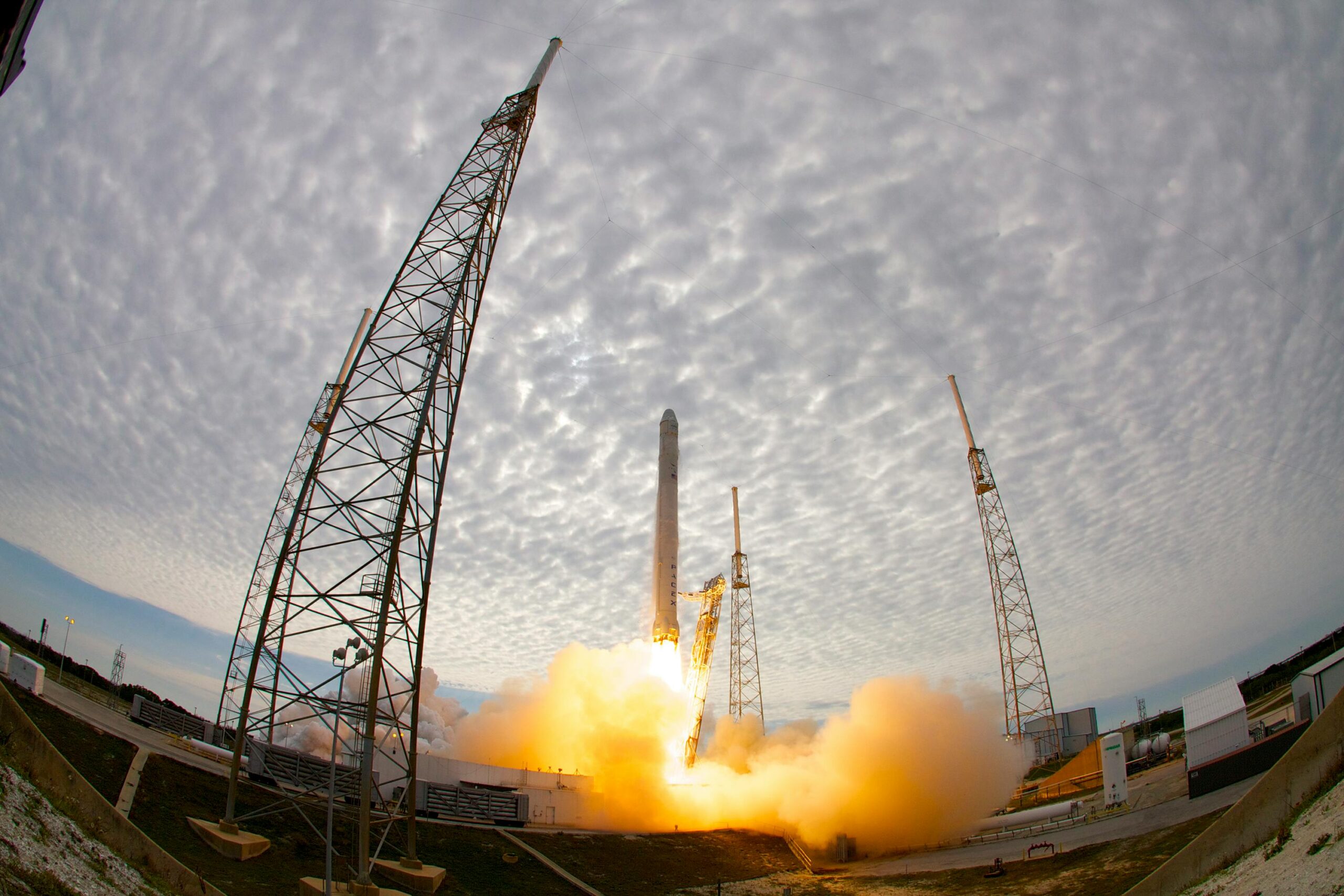
General Galactic, a Los Angeles-based aerospace startup cofounded by former SpaceX propulsion engineer Halen Mattison, plans to test its water-to-methane propellant system this fall. The Genesis-1 pilot plant already produces 200 liters of methane per day from carbon dioxide and water. If the space test succeeds, it would retire the “yada yada” that has long haunted deep-space mission planning.
For decades, the grand vision of human spaceflight has rested on a quiet hand-wave. We will return to the Moon. We will find ice there. We will mine it, split it into hydrogen and oxygen, and—yada yada—we will fly to Mars. Then we will find ice on Mars, combine it with the atmospheric CO₂, and yada yada, we will fly home.
The product solves a problem that has nagged mission architects since the 1960s: fuel is heavy, and you cannot carry round-trip propellant for a Mars mission inside your launch fairing. The startup’s answer is not to mine ice and electrolyze it separately, but to skip straight to methane—the same CH₄ that powers SpaceX’s Raptor engines—by feeding captured carbon dioxide and water into a proprietary reactor that produces fuel on demand.
READ ALSO: https://modernmechanics24.com/post/lasers-probe-darwin-priceless-specimens/
There is, of course, a limitation. General Galactic has not yet tested its system in space. The Genesis-1 pilot plant, operating in a nondescript industrial space near Los Angeles International Airport, produces 200 liters of methane per day under controlled terrestrial conditions. The company plans to launch a demonstration payload this fall aboard a commercial rideshare mission.
What it actually does for astronauts is manufacture their return ticket. The Genesis system consumes locally sourced CO₂ and water, performs a catalytic conversion, and outputs pipeline-ready methane and breathable oxygen. No ice mining operation. No complex ISRU chain. No reliance on planetary geology cooperating. “We are eliminating the supply chain,” Mattison told reporters. “The fuel is already at your destination. You just need to know how to brew it.”
That test will confirm whether the reactor operates in microgravity, whether the catalysts degrade differently off-Earth, and whether the yield justifies the mass penalty of bringing the system itself. The startup is candid about the gap between lab-scale chemistry and interplanetary infrastructure. Mattison, a University of Southern California graduate who spent years building engines at SpaceX, describes the upcoming flight as “the moment we stop assuming and start knowing.”
WATCH ALSO: https://modernmechanics24.com/post/china-new-massive-battle-tank-live-fire/
The summary value, however, is transformative. If successful, General Galactic replaces the entire Lunar‑to‑Mars ISRU architecture—mining equipment, electrolysis stacks, liquefaction plants—with a single, modular reactor that consumes planetary atmosphere and waste water. The economics shift from extraction to synthesis. The timeline shifts from decades to years. And the hand-wave becomes an engineering diagram.
The innovator behind the concept is Halen Mattison, who cofounded the company with Luke Neise, a technologist with deep experience in gas separation and catalytic conversion. Mattison is the visionary; Neise built the reactor. Their shop floor in Los Angeles is cluttered with pressure vessels, gas chromatographs, and stacks of printed circuit boards controlling automated valves. The team, drawn largely from SpaceX, NASA JPL, and Blue Origin, is deliberately small. “We are not trying to build a colony,” Mattison said. “We are trying to build a fuel pump.”
The timing is not accidental. NASA’s Artemis Accords and China’s ILRS both assume in-situ resource utilization. Both have treated propellant production as a downstream problem, to be solved after the habitats are landed. General Galactic is effectively telling the industry: the fuel plant lands with the crew, not a decade later.
READ ALSO: https://modernmechanics24.com/post/battery-made-from-rust-show-high-energy/
Whether the fall test succeeds—and whether the system scales from 200 liters to the tons required for a Starship refuel—remains genuinely uncertain. Mattison does not pretend otherwise. But the company has already done something no NASA study has managed: it has replaced the yada yada with a flight date.