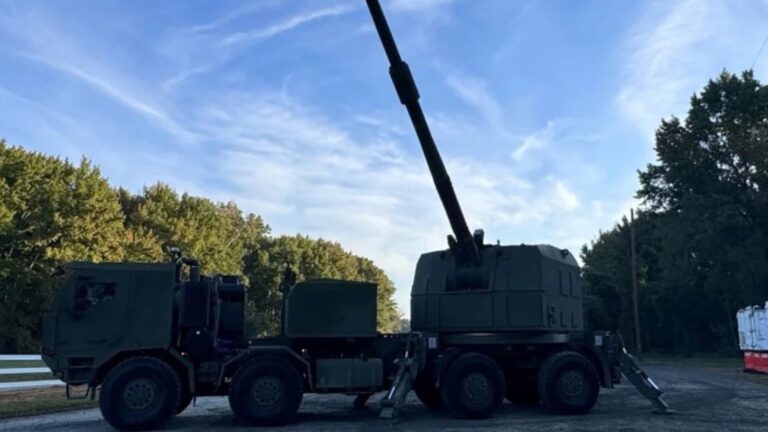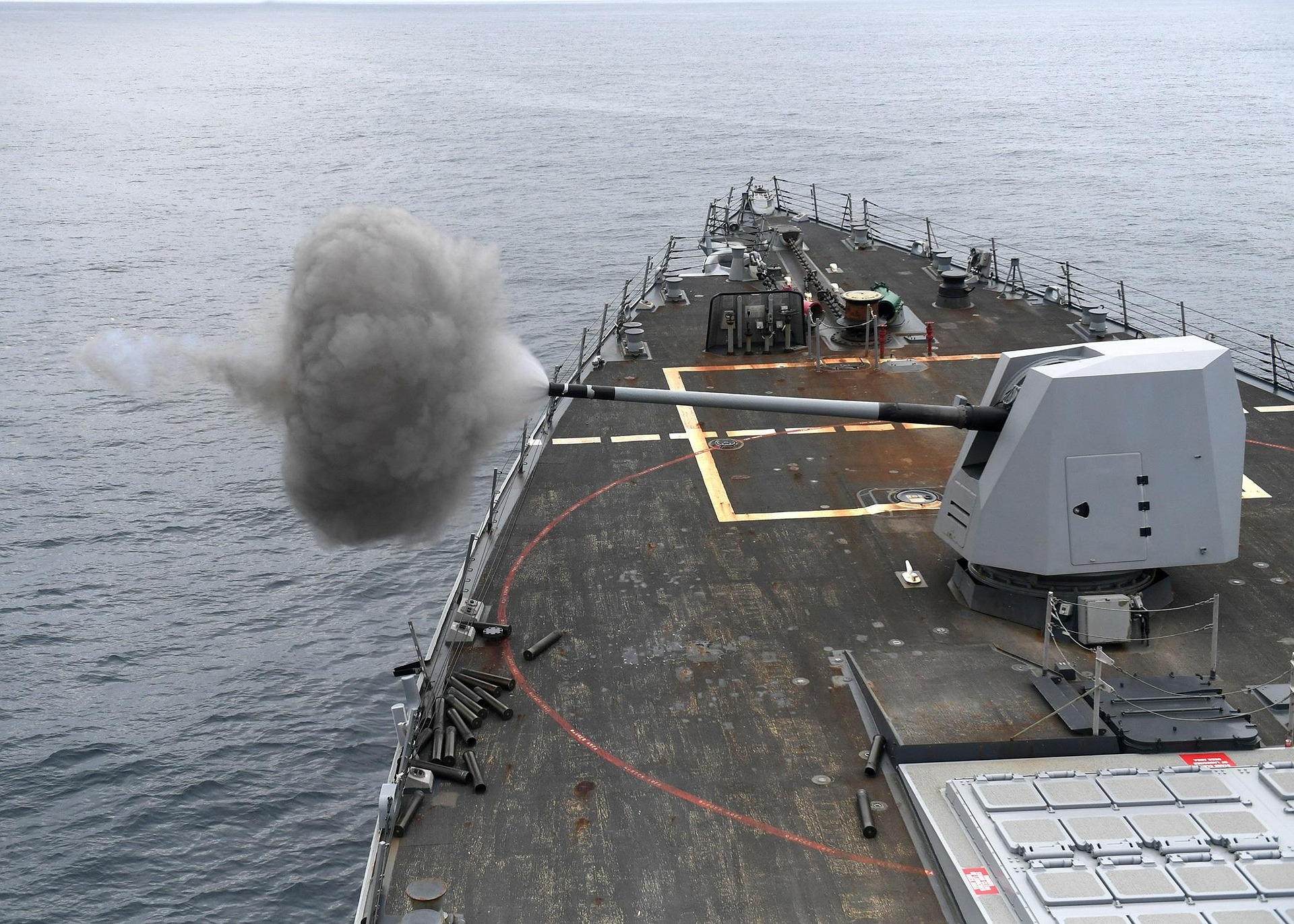
China is developing a new type of ultra-small hypersonic glide missile that can be fired from an 80mm naval anti-aircraft gun.
The missile, designed by researchers from Nanjing University of Science and Technology, can reach speeds close to Mach 6 as soon as it leaves the gun barrel. This makes it far faster than traditional anti-aircraft shells, allowing it to hit enemy fighter jets or drones at distances of more than 20 kilometres and altitudes of up to 10,000 metres.
Because of its extreme speed and compact size, enemy aircraft may only detect the missile when it is about 3 kilometres away. At that point, the projectile would still be travelling at around Mach 3.6, giving pilots only a few seconds to react.
Computer simulations show the missile is highly accurate. Even if a target performs an almost 90-degree turn to escape, the missile can adjust its path mid-flight and still hit the target. The scientists claim the system has a 99 per cent kill probability under simulated conditions.
READ ALSO: https://modernmechanics24.com/post/ut-startup-rare-earths-industrial-waste/
Unlike traditional air defence missiles, which are expensive and limited in number, this hypersonic projectile can be fired from standard anti-aircraft guns. Such guns can typically fire about one round per second. The low cost and high firing rate could allow near-continuous air defence coverage.
“With advantages such as rapid strike, precision guidance, and high lethality, hypersonic guided projectiles are reshaping traditional firepower combat models,” said Wang Xugang, a professor at Nanjing University of Science and Technology, who led the research team. “They have broad application prospects in future air warfare,” he wrote in a peer‑reviewed paper published in the University Journal last month.
According to the journal, the weapon is a new generation of precision-strike technology that could potentially replace medium- and short-range air defence missiles if deployed at scale.
However, the researchers also acknowledged major technical challenges. At hypersonic speeds, sharp turns or zigzag manoeuvres can cause guidance systems to lose accuracy. Traditional missile guidance methods may not respond fast enough during the final moments before impact.
WATCH ALSO: https://modernmechanics24.com/post/china-humanoid-robot-plays-basketball/
To solve this, Wang’s team developed a two-stage guidance system. In the first phase, the missile plans an efficient mid-course flight path to maintain speed and energy. In the second, terminal phase, the missile makes rapid and precise adjustments to lock onto the target.
The team used a mathematical technique known as ‘multi-objective optimisation’ to balance speed, stability, and manoeuvrability. In the final moments of flight, an advanced guidance system enables the missile to predict target movements and track even highly agile aircraft.
According to the researchers, this guidance system reduces manoeuvre stress by more than 90 per cent compared with conventional designs. It also produces a smoother flight path and improves resistance to interference.
Simulation results show very small miss distances, high reliability, and strong performance against fast-moving targets, the team said.