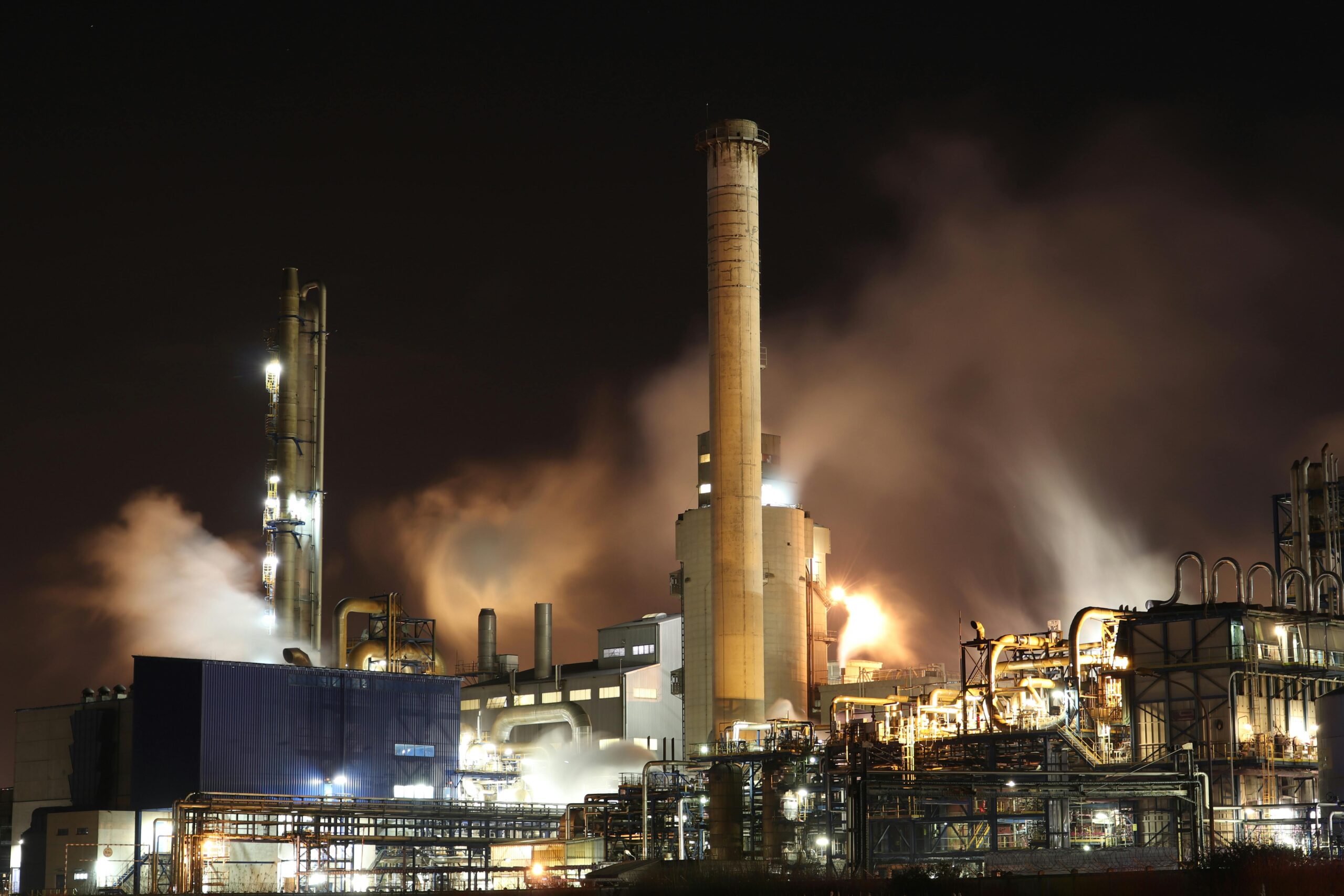
A research team led by Dr. Yun-Jo Lee at the Korea Research Institute of Chemical Technology (KRICT) has successfully demonstrated a pilot plant that converts landfill gas from food waste into Sustainable Aviation Fuel (SAF). In collaboration with EN2CORE Technology, the facility produces 100 kg of fuel per day with over 75% selectivity for liquid fuels, offering a potential path to cheaper, decentralized clean jet fuel production.
The race to decarbonize aviation is hitting a familiar bottleneck: cost. Sustainable Aviation Fuel (SAF) can cut lifecycle emissions by up to 80%, but its premium price has led airlines to add surcharges to tickets. The core issue is feedstock. Most SAF today comes from used cooking oil, a supply that’s limited, contested, and expensive. But what if the feedstock was something we actively try to get rid of? A Korean research consortium believes they have the answer, and it’s coming from the landfill.
The product of their work—an integrated catalytic process—solves a dual problem: it tackles the growing challenge of organic waste management while creating a new, abundant, and low-cost feedstock stream for clean aviation fuel. This isn’t a distant concept. The team has built a fully operational pilot plant on a landfill site in Daegu, South Korea, turning theory into tangible, daily production.
READ ALSO: https://modernmechanics24.com/post/kia-ev-electric-hatch-cold-test/
The basic function of the system is a multi-stage conversion. First, landfill gas—a mix of methane and carbon dioxide—is captured and purified. This gas is then transformed into synthesis gas (syngas) using a proprietary plasma reformer. Finally, through a tailored Fischer-Tropsch synthesis process, that syngas is catalytically converted into liquid hydrocarbon chains suitable for jet engines. The devil, as always, is in the details, and the team’s breakthroughs in catalysis and reactor design are what make the process viable.
A major hurdle in such gas-to-liquid processes is poor selectivity, resulting in too much unwanted byproduct like solid wax. The KRICT team tackled this by developing specialized zeolite- and cobalt-based catalysts, published in ACS Catalysis and Fuel, which dramatically shift the output toward the desired liquid fuels. Perhaps the most clever innovation is the microchannel reactor. Catalytic conversion generates intense heat that can degrade catalysts and destabilize the process. Their reactor design alternates thin layers of catalyst with coolant channels, whisking away heat almost instantly. This not only protects the catalyst but allowed the team to shrink the reactor volume to one-tenth that of conventional systems, a key step toward modular, scalable deployment.
WATCH ALSO: https://modernmechanics24.com/post/youtuber-captures-lightning-in-a-bottle/
However, the path from a successful 100 kg-per-day pilot to powering commercial flights has a significant limitation: scale and economic competitiveness. While landfill gas is cheap and abundant, building out this infrastructure at thousands of waste sites worldwide represents a colossal capital investment. The technology must prove it can operate stably for years, not just days, and that its fuel can be cost-competitive with both conventional SAF pathways and fossil jet fuel after scaling. It’s a promising start, but the real test of market viability lies ahead.
The overall summary and value of this achievement is its blueprint for a decentralized, circular economy model for aviation. Instead of relying on massive, centralized refineries and imported feedstocks, this technology could be deployed locally at landfills and wastewater treatment plants, turning a community’s waste problem into an energy asset. KRICT President Young-Kuk Lee stated the technology represents a solution that achieves “both carbon neutrality and a circular economy.”
READ ALSO: https://modernmechanics24.com/post/microbes-extract-key-metals-green-tech/
The innovator behind the research vision and catalytic process is Dr. Yun-Jo Lee of KRICT, while the engineers who built and operate the integrated pilot system are the teams at KRICT and their industrial partners at EN2CORE Technology, who developed the crucial upstream gas purification and plasma reforming steps.
As reported by the institute, this work marks Korea’s first domestic demonstration of SAF production from landfill gas. In a world desperate for scalable climate solutions, it offers a compelling vision: the very trash we discard today could one day help power the flights of tomorrow, closing the loop on waste and fueling a cleaner future.