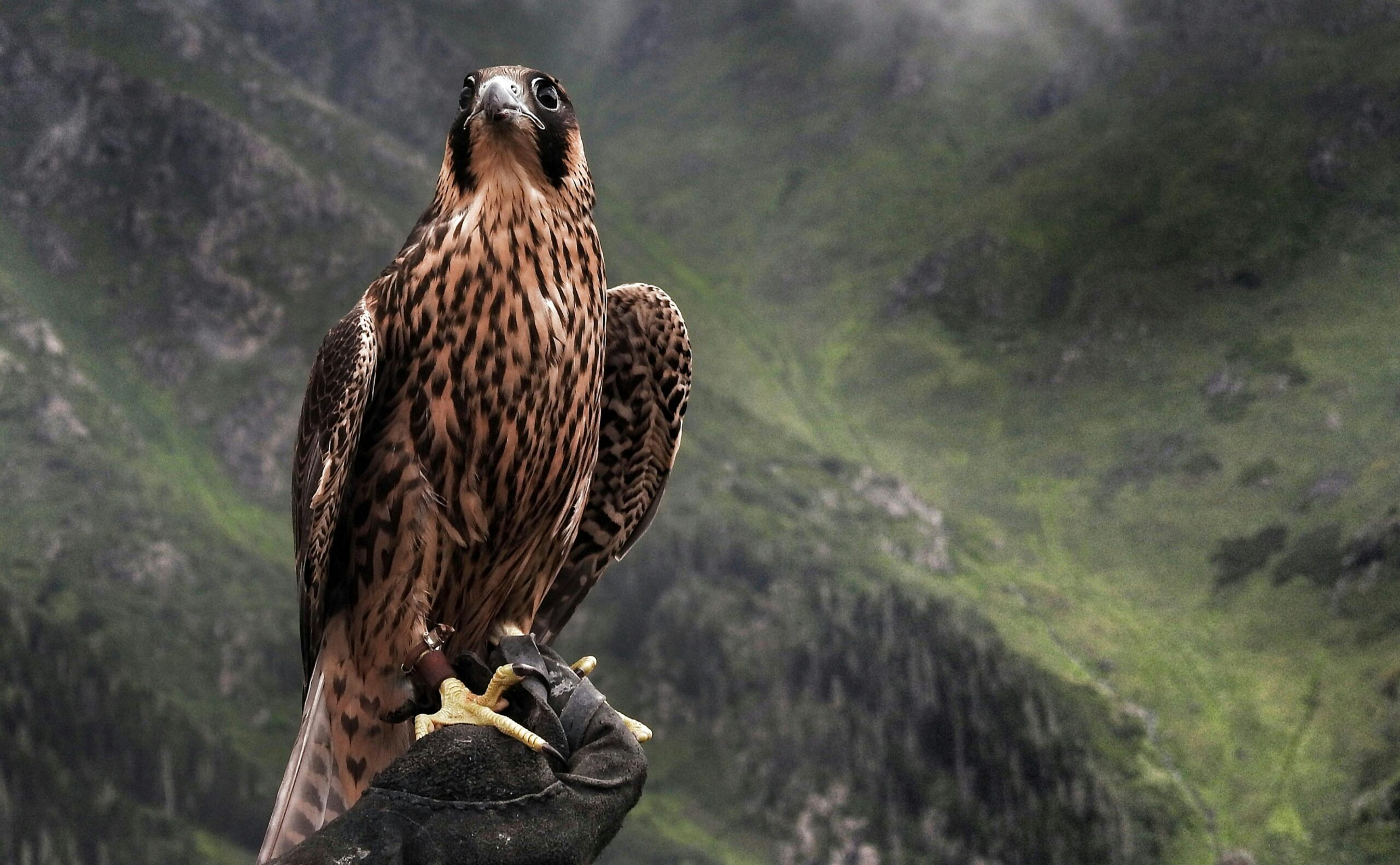
In a stunning ornithological first, a Siberian peregrine falcon—the world’s fastest animal, capable of 300 km/h dives—has been photographed in the Central Australian outback. Ecologist Tim Henderson captured the historic image over Newhaven Wildlife Sanctuary, marking the furthest inland and first arid-zone sighting on record for this elusive Arctic migrant, potentially linked to recent heavy rainfall transforming the desert landscape.
The vast, arid expanses of Central Australia aren’t where you’d typically go to spot a bird that breeds on the remote Arctic tundra. Yet, that’s exactly where one decided to make a surprise appearance, rewriting the guidebooks and sending a ripple of excitement through the birding community. This wasn’t just any bird; it was the feathered equivalent of a fighter jet, the Siberian peregrine falcon, caught on camera where no scientist had ever recorded it before.
For ecologist Tim Henderson, a routine survey for the Australian Wildlife Conservancy turned into a moment of scientific serendipity. A blur of motion streaked across his field of view, too fast to identify in the moment. It was only later, reviewing his photographs, that the magnitude of what he’d captured became clear. The distinctive facial markings, particularly a thin stripe below the eye, confirmed it: a Siberian peregrine falcon, thousands of kilometres from its expected coastal migration route.
READ ALSO: https://modernmechanics24.com/post/bedrock-robotics-270m-driverless-excavator/
The core discovery or “product” of this sighting solves a specific puzzle: it fills a critical gap in our understanding of this subspecies’ migration range and adaptability. While these falcons are known to visit Australian coastlines and mountain ranges, their presence in the continent’s arid heart was purely speculative until now. This single data point dramatically expands the known map for this incredible traveller.
The basic function of this recorded observation is to provide a concrete, verifiable data point for ecological science. It acts as a proof-of-concept that these remote inland ecosystems, freshly transformed by rare heavy rains, can support and attract apex avian predators from hemispheres away. This tangible evidence allows scientists to adjust species distribution models and understand the fluidity of migration paths in a changing climate.
The person behind this breakthrough is lead innovator and field ecologist Dr. Tim Henderson, whose trained eye and readiness with a camera turned a fleeting moment into documented history. The “engineering” of this discovery was a combination of Henderson’s expertise, the advanced digital camera technology that allowed for clear, reviewable images, and the long-term conservation management of the Newhaven Wildlife Sanctuary that maintains the habitat.
WATCH ALSO: https://modernmechanics24.com/post/china-40000t-sichuan-assault-ship/
A significant limitation, however, is the solitary and opportunistic nature of the sighting. As Henderson notes, nobody truly knows how often these birds visit Australia, let alone its interior. This is a single snapshot in time, not yet a pattern. The region remains under-observed, and whether this falcon was a lone vagrant or a pioneer indicating a new migration corridor is still unknown. More consistent monitoring is needed to draw broader conclusions.
So, why was a bird built for diving on shorebirds over tundra and coastlines hunting in a desert? Henderson proposes a compelling theory directly tied to recent climatic events. Exceptionally heavy rainfall in recent years has created temporary wetlands across the normally dry sanctuary. These wetlands, in turn, attracted an abundance of prey species, drawing in a diverse array of raptors and potentially pulling this falcon off its typical course in search of food.
The overall value and summary of this record is multifaceted. For conservation, it highlights the global interconnectedness of ecosystems—how weather in Australia can influence a bird from Siberia. It underscores the importance of protecting inland refuges like Newhaven, which can serve as vital pit-stops for unexpected visitors. For science, it’s a reminder that animal behaviour is dynamic and full of surprises, especially as global climate patterns shift.
READ ALSO: https://modernmechanics24.com/post/abf-crystal-china-most-energetic-laser/
“That was pretty exciting, and pretty hard to get, given how fast they are,” Henderson remarked, acknowledging the sheer luck and skill involved. The non-blurry photo of an animal that can outpace a cheetah is a feat in itself. This sighting also coincides with a growing public fascination with birds, fueled by live streams like those of the Melbourne peregrine falcons, making the timing perfect for public engagement.
Ultimately, the image of this Arctic speedster over red desert sands is more than just a trophy for birders. It’s a symbol of nature’s unpredictability and resilience. It proves that even in the most watched skies, there are still firsts to be found, reminding us that careful observation, preserved wild spaces, and a little preparedness can lead to discoveries that change what we thought was possible.