Japanese researchers have successfully hauled up sediment containing valuable rare earth elements from a crushing depth of 6,000 metres (20,000 feet) near remote Minamitori Island. This test mission marks a critical step in Japan’s national strategy to slash its heavy dependence on China for the minerals essential to modern tech and defense.
In a bold move for economic security, Japan has pulled off a deep-sea mining test that sounds like science fiction. A state-backed research team has retrieved mud rich with rare earth elements from the pitch-black ocean floor nearly four miles down. The sample, sucked up from the seabed near Minamitori Island, some 2,000km (1,243 miles) southeast of Tokyo, is now headed for analysis to see if its riches can ever be commercially tapped.
“It’s a meaningful achievement both in terms of economic security and comprehensive maritime development,” stated government spokesman Kei Sato. He confirmed the mission’s success, adding that “details will be analysed, including exactly how much rare earth is contained” in the haul. This isn’t just an academic exercise. For a country that imports roughly 70 percent of its rare earths from China, finding an independent supply is a pressing national priority.
The mission is part of a decade-old plan that has gained urgent momentum. Shoichi Ishii, programme director for Japan’s National Platform for Innovative Ocean Developments, put it bluntly: “It’s about economic security. The country needs to secure a supply chain of rare earths. However expensive they may be, the industry needs them.” Rare earths—that group of 17 metallic elements—are the unsung heroes in everything from smartphones and electric vehicles to advanced fighter jets, and China currently dominates the global supply.
READ ALSO: https://modernmechanics24.com/post/china-stealth-bomber-supersonic-flight/
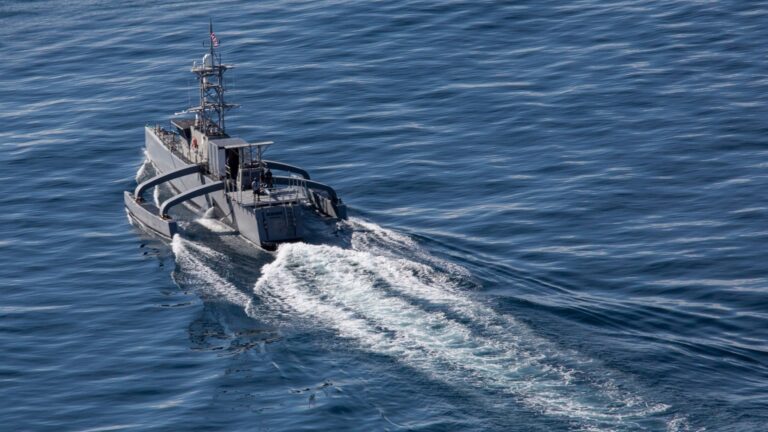
But why dive so deep? The answer lies in sovereignty and strategy. While international waters are mired in regulatory debates, Japan’s project operates within its own territorial waters near Minamitori. This gives the nation more control. The test was conducted by a vessel operated by the Japan Agency for Marine Earth Science and Technology, and the next phase is even more ambitious. According to the government’s Cabinet Office, the plan is to bring up 350 tonnes (385 tons) of mud per day for testing as early as February 2027.
The technical challenges, however, are as vast as the ocean depth. “Sucking up mud below the surface, miles down in the dark with tremendous pressure, has the hallmark of outsize operating costs,” noted David Abraham, an affiliate professor at Boise State University. No one has ever achieved large-scale commercial mining at these depths. The sheer physics of operating at 6,000 metres, where pressure is 600 times greater than at sea level, presents monumental engineering and financial hurdles.
WATCH ALSO: https://modernmechanics24.com/post/buildroid-ai-expands-robotics-platform/
What’s in the mud? Researchers like Tadanori Sasaki, a senior research director at the Institute of Energy Economics, will now scrutinize the sample to identify which rare earths are present and in what concentrations. The future of the entire project hinges on these results. Japan has history here; its predecessor agency, Jogmec, successfully excavated a cobalt-rich crust from the seabed in 2020, proving some deep-sea extraction is possible.
Experts remain cautiously optimistic but realistic about the timeline and economics. “Market conditions are favourable for Japan as it looks to advance testing,” said James Tekune, a research associate at Adamas Intelligence. Yet, he predicts deep-sea mining will likely be “a niche supply stream” at best. For Japan’s government and industry, the drive isn’t just about immediate profit—it’s about building a safety net. As Ishii suggests, the mission parallels other government-backed supply chain investments, like the US government’s $400 million investment in a domestic rare earth mine.
READ ALSO: https://modernmechanics24.com/post/mytra-raises-120m-pallet-storage-robots/
This deep-sea endeavor highlights a new front in the global competition for critical resources. With China demonstrating a willingness to weaponize its rare earth dominance, as seen with recent export bans, Japan’s journey to the ocean floor is about more than minerals. It’s a high-stakes bid for technological independence, one muddy sample at a time.