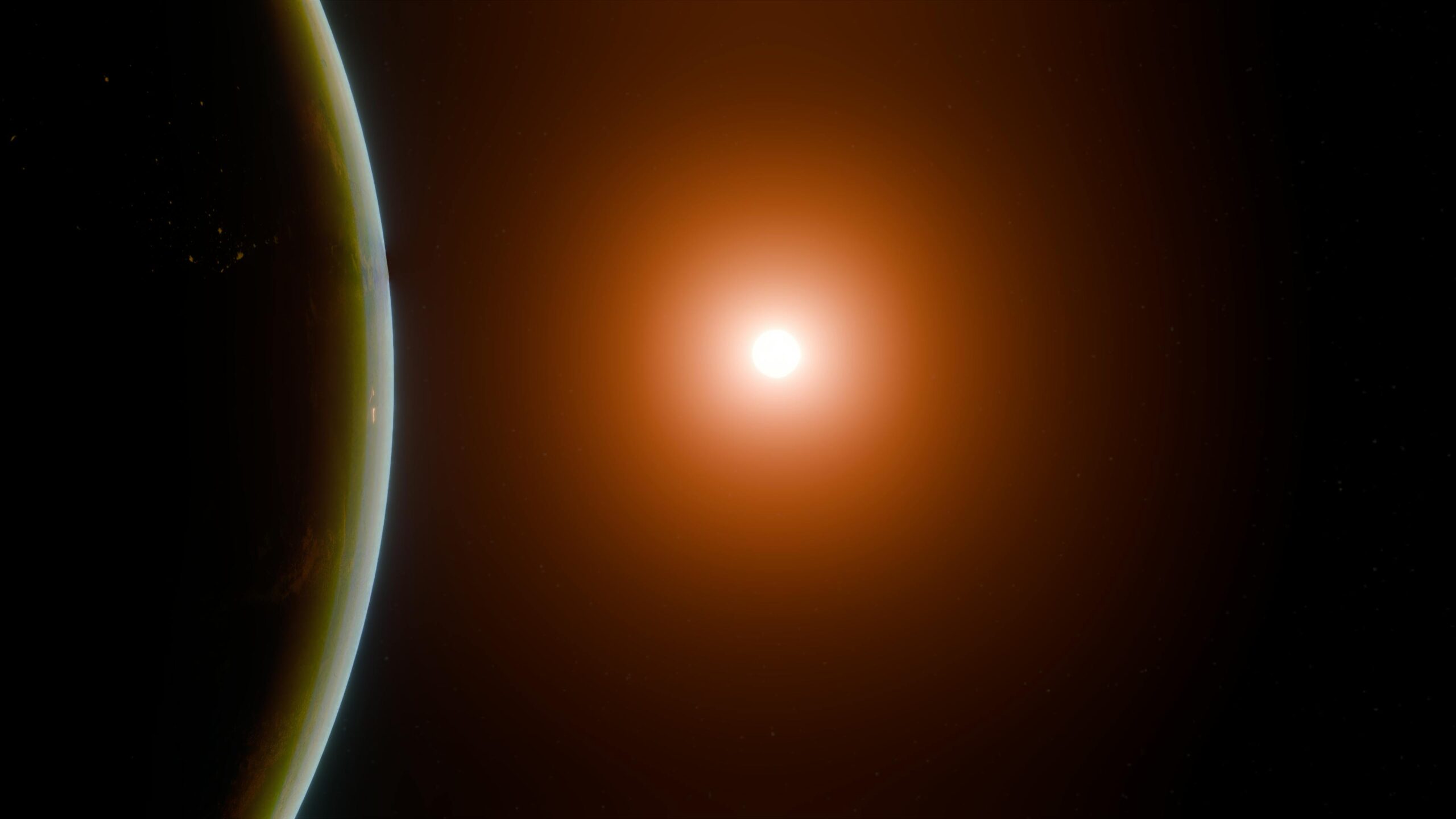
The National Oceanic and Atmospheric Administration’s (NOAA) Space Weather Prediction Center (SWPC) has confirmed Earth is experiencing its largest solar radiation storm in over 20 years, a severe event disrupting aviation and satellite operations while sparking dazzling auroral displays across Europe. Triggered by a massive coronal mass ejection from the Sun, the storm reached a level four out of five on the severity scale, marking the most intense solar radiation event since the historic Halloween storms of October 2003.
The Sun’s recent tantrum isn’t just a light show. According to forecasters at the SWPC, this event represents a serious influx of fast-moving charged particles that can significantly impact our technology-dependent world. The center has been in constant communication with airlines, NASA, the Federal Aviation Administration, and power grid operators to mitigate risks. “We’ve been making all these phone calls to ensure that we are keeping all the critical technological infrastructure operators in the know of what’s happening,” stated SWPC forecaster Shawn Dahl.
So, what exactly does a solar radiation storm of this magnitude mean for us? For starters, it increases radiation exposure for astronauts aboard the International Space Station, who may need to move to more shielded areas, and for passengers and crew on flights traversing polar routes. Satellites that we rely on for everything from GPS to communications are also under stress. While widespread public disruption wasn’t expected Monday night, according to University of Colorado Boulder solar physicist Ryan French, precision industries felt the pinch. During a similar geomagnetic storm in May 2024, John Deere reported that some farmers using GPS for field work experienced disruptions.
READ ALSO: https://modernmechanics24.com/post/ubtech-partners-with-airbus-robotics/
This storm was accompanied by a separate but related severe geomagnetic storm, which arrived Monday afternoon. Both phenomena stem from the same source: an incredibly active region on the Sun that unleashed an X-class solar flare—the most powerful category—on Sunday. This flare blasted a coronal mass ejection (CME), a colossal cloud of magnetized plasma, directly toward Earth. When this cloud collides with our planet’s magnetic field, it can cause beautiful auroras and, in extreme cases, induce dangerous currents in power grids. The October 2003 storms, for example, caused power outages in Sweden and damaged transformers in South Africa.
The anticipation for a widespread aurora borealis, or northern lights, display across the United States was high. Forecasters initially thought the lights might be visible as far south as Alabama. However, the magnetic orientation of the incoming solar material acted like a shield, deflecting much of the energy away from mid-latitudes and toward Europe instead. As a result, spectacular hues of green and purple illuminated skies from Germany to Austria, while viewers in the U.S. were largely left watching online photos. “The orientation of the storm once it reached Earth prevented widespread colorful displays from appearing in the skies over the US,” reported EarthSky.
WATCH ALSO: https://modernmechanics24.com/post/china-humanoid-robot-embroiders-itself/
What’s next? The Sun’s active region hasn’t quieted down. French noted that more flares are possible in the coming days, and any new eruptions have a good chance of being directed at Earth. This period of heightened solar activity is a potent reminder of our star’s power and our vulnerability to space weather. While we marvel at the celestial ballet of the auroras, teams of scientists and engineers are working behind the scenes to protect the invisible infrastructure that powers modern life. This event underscores the critical importance of space weather forecasting—not just for a pretty light show, but for safeguarding the technological backbone of our global society.
READ ALSO: https://modernmechanics24.com/post/oral-probiotics-can-good-bacteria-prevent-cavities/