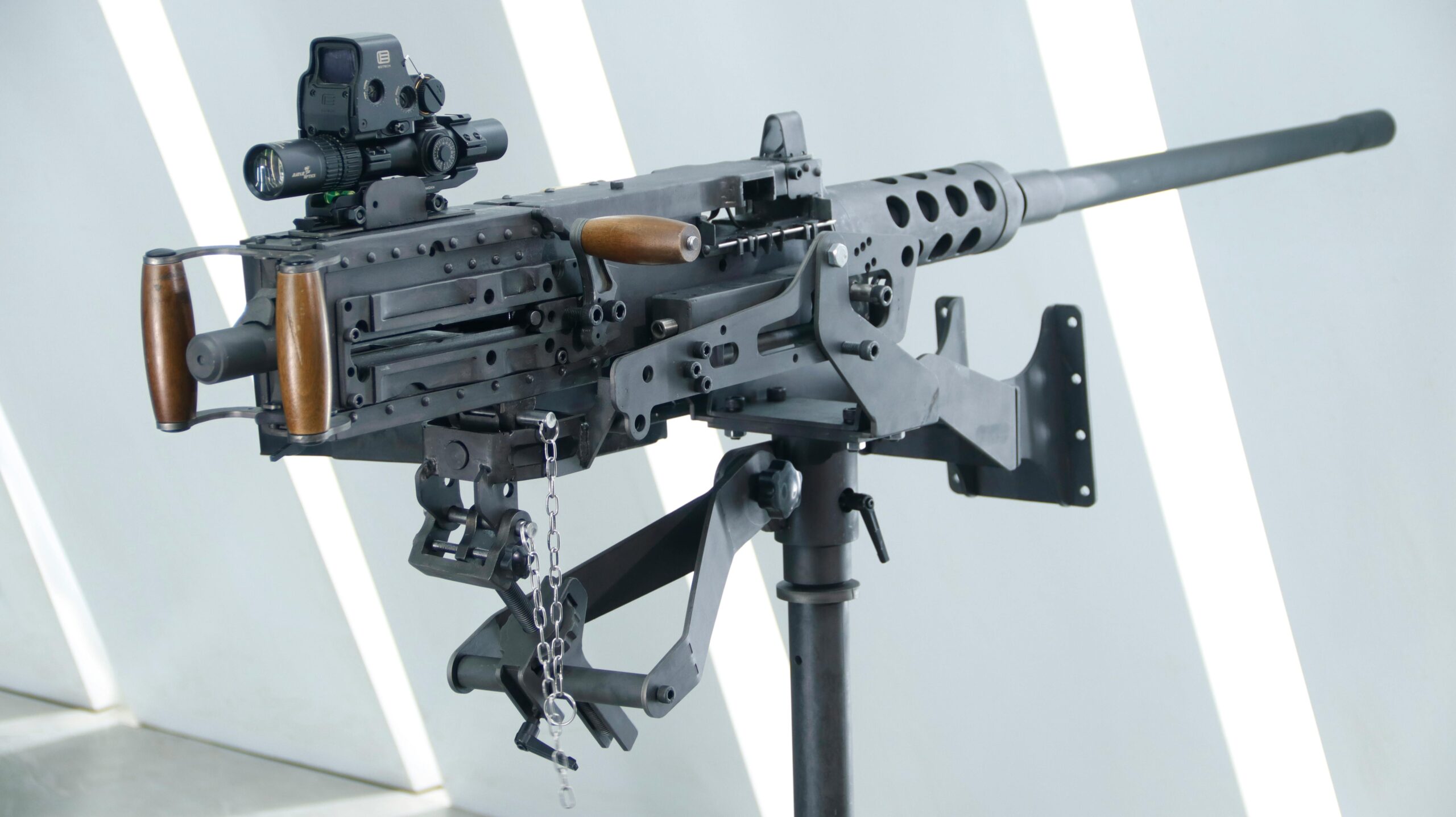
The U.S. Navy, on behalf of the entire Department of Defense, is launching a push to replace the iconic Minigun’s tangled web of variants with a single standardized model, designated the GAU-24/A. A new request for information from NAVAIR’s Program Executive Office for Unmanned Aviation and Strike Weapons (PEO U&W) seeks a manufacturer to build the common weapon, aiming to solve six decades of logistical complexity.
Since its thunderous debut in the Vietnam War, the six-barrel Gatling gun has become a legend. But that legacy has a cost. The U.S. military now navigates a maze of variants—from the GAU-17/A to the Mk 49 Mod 0—each with subtle differences that make parts non-interchangeable and strain supply chains. The new GAU-24/A initiative is a direct response to this self-inflicted complexity. “The GAU-24/A machine gun is intended to serve as the common replacement for all other M134-based weapons,” states the official contracting notice from c. In short, the Pentagon wants one Minigun to rule them all.
The plan is moving with deliberate speed. According to the tentative schedule laid out by the Navy, a contract award could kick off work in Fiscal Year 2027. Within 12 months of that award, the winning contractor would need to deliver an initial five GAU-24/A guns to the Naval Surface Warfare Center, Crane Division (NSWC Crane) in Indiana for rigorous testing. The full development and production effort could then span anywhere from 36 to 60 months. While the notice doesn’t specify desired features or a potential conversion path for existing guns, the overarching goal is clear: streamline logistics, simplify training, and ensure every service branch is firing from the same technical playbook.
READ ALSO: https://modernmechanics24.com/post/us-made-monolithic-3d-chip-ai-boost/
Why is this standardization such a big deal now? The Minigun’s history is one of brilliant adaptation, but also of branching evolution. Originally developed by General Electric in the early 1960s, the weapon—designated GAU-2/A by the Air Force and M134 by the Army—revolutionized aerial firepower. Its electric drive system allowed for staggering rates of fire between 3,000 and 6,000 rounds per minute, a hailstorm of 7.62x51mm ammunition perfect for suppressing enemy positions. Over the decades, specialized versions emerged: lighter models with titanium parts for special operators, corrosion-resistant kits for Navy riverine units, and improved feed systems for reliability. This created a “maze of designations,” reported The War Zone, that today burdens maintainers and logisticians.
Despite the variants, the core value of the Minigun remains undisputed across the force. It’s a weapon of overwhelming suppression, a tool to break an ambush or cover a retreat in seconds. You’ll find it mounted on U.S. Army 160th SOAR helicopters, in the doors of Marine Corps UH-1Y Venoms, on Air Force HH-60 Pave Hawks, and even experimentally on M1 Abrams tanks as a counter-drone measure. Its ability to fire standard 7.62x51mm NATO rounds, shared with rifles and machine guns across the inventory, is a major logistical advantage. The drive for a common GAU-24/A isn’t about replacing the Minigun’s role; it’s about securing its future by making it sustainable for another 60 years.
WATCH ALSO: https://modernmechanics24.com/post/drum-shaped-antenna-reflector-nisar-satellite/
Looking ahead, this consolidation could have ripple effects. A single, modernized technical data package could make it easier to integrate new ammunition types, like the 6.8mm rounds from the Army’s Next Generation Squad Weapon program, should that ever become a requirement. More immediately, it ensures that whether a Minigun is destined for a gunship over the Pacific or a special operations craft in the Middle East, it’s built, maintained, and repaired identically. For an iconic weapon that has defined American firepower for generations, the GAU-24/A program represents a necessary step toward a simpler, more sustainable, and just as devastating future.