ISRO has successfully conducted an important test on Main Parachutes for the Gaganyaan Crew Module at the Babina Field Firing Range (BFFR), Jhansi.
This test is the part of the ongoing series of Integrated Main Parachute Airdrop Tests (IMAT) for the qualification of parachute system for Gaganyaan Mission.
For the Gaganyaan Crew Module, the parachute system comprises a total of 10 parachutes of 4 types.
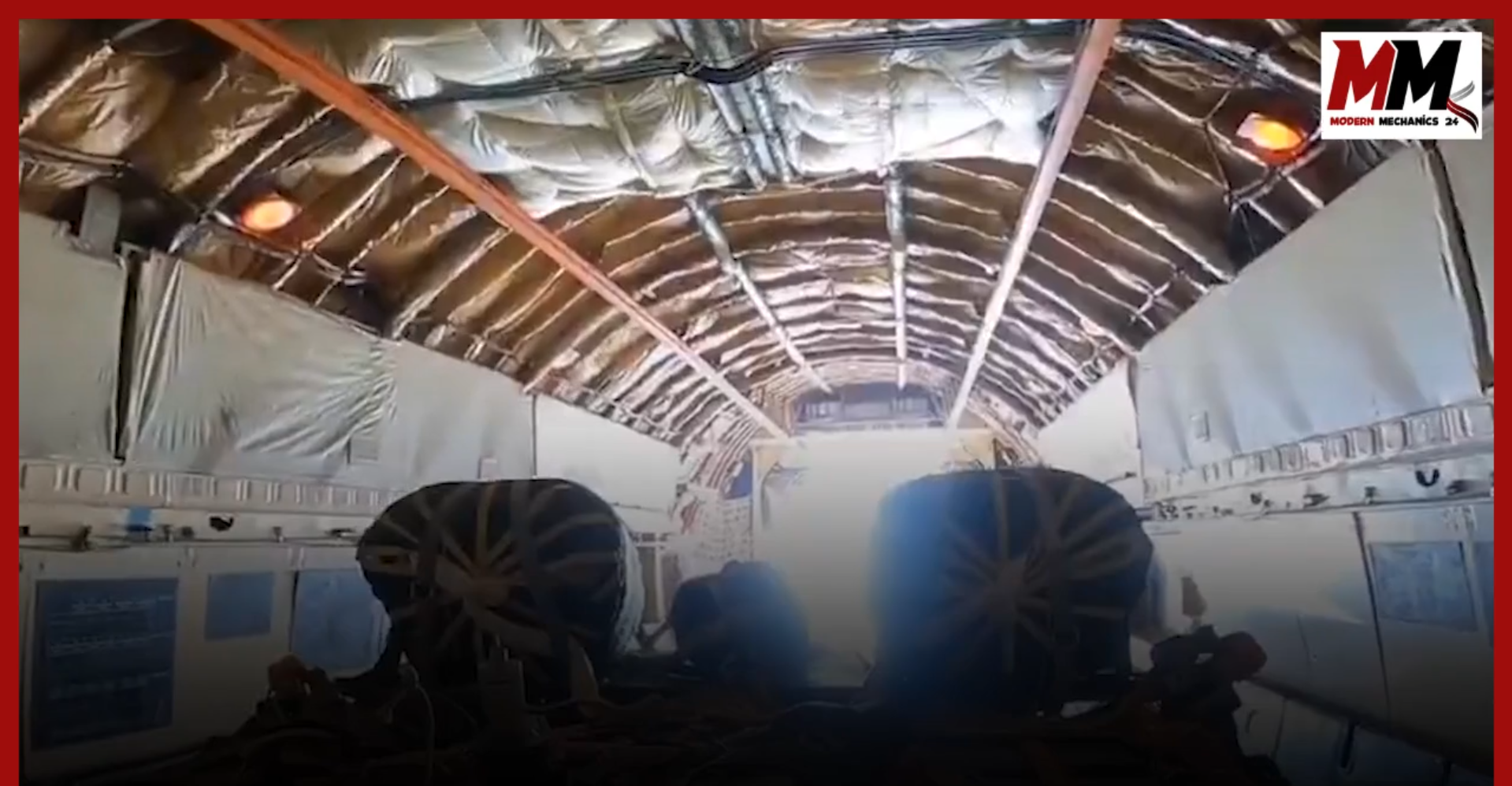
A simulated mass equivalent to the Crew Module was dropped from an altitude of 2.5 km using the Indian Air Force’s IL-76 aircraft. The parachute system deployed as planned and the sequence was executed flawlessly, and the test article achieved a stable descent and soft landing, validating the robustness of the parachute design.
The successful completion of this test marks another significant step toward qualifying the parachute system for human spaceflight.
The system is designed with redundancy—two of the three main parachutes are sufficient to achieve a safe landing.
The main parachutes of the Gaganyaan mission deploy in a step-by-step process known as reefed inflation. In this process, the parachute first opens partially, which is called reefing, and then fully opens after a predetermined period of time, known as disreefing.
READ ALSO: https://www.modernmechanics24.com/post/pla-reveals-gj11-drone-teaming-with-j20-fighter
This process is carried out using pyro device.
In this test, the one of the possible extreme scenarios of delay in the disreefing between the two main parachutes was successfully demonstrated validating the main parachutes for the maximum design.
The test evaluated the system’s structural integrity and load distribution under asymmetric disreefing conditions—one of the most critical load scenarios expected during actual mission descent.